در نگاه نخست شاید خیلی از ایرانیان به داشتن فرهنگ غنی و باسابقه شهره باشند اما این موضوع جنبه تاریخی دارد و در اغلب موارد نمی توان این فرهنگ غنی را به دنیای معاصر و کنونی ایرانیان تعمیم داد. آنچه که در ساختار فرهنگی یک ملت تعیین کننده است، لزوم بازنویسی همان فرهنگ برای بازتولید آن در لحظه اکنون و آینده است. با این حال، آیا می توان چنین چیزی را در شرایط کنونی ایران مشاهده کرد؟
احتمالا همه ما به عنوان یک ایرانی، قبول داریم که فرهنگ سرزمینی ما حاصل تمام مداخلات داخلی و خارجی است. آنچه که ضرورت یافتن مفهوم فرهنگ را در یک سرزمین به وجود می آورد، فرهنگ گذر از چیزی است که ما آن را یک اتفاق تاریخی مینامیم. منظور از اتفاق تاریخی این است که ایرانیان در گذر از یک اتفاق بزرگ، به یاد می آورند که چه بوده اند و چه شده اند و چگونه میتوانند آن را در مسیر پیش رو حرکت دهند. یادآوری این موضوع برای ما به مفهوم یافتن یک چهره از سرزمینی است که از دیر باز (چندین قرن اخیر)، روی آرامش به مفهوم زیستن با آگاهی را ندیده است. این موضوع دریچه ورود فرهنگ است که می تواند تمام معیارهای مشخص و تاریخی را زیر سوال ببرد. از این منظر، چالش اصلی این است که در حال حاضر کجای این تاریخ قرار داریم؟ آیا زیست ایرانیان دچار تحول ناهمگون شده است یا همچنان درگیر پارادوکسهایی است که آنها را از یافتن خویش دور میکند؟
اجرا در شهر به مثابه رانندگی در قانون جنگل
حال میخواهم درباره این موضوع صحبت کنم که چرا اجرا در شهر به مثابه رانندگی در قانون جنگل، می تواند سطح فرهنگی ایرانیان را از موقعیت گذشته به ماقبل گذشته ببرد. یعنی به جای اینکه رانندگی بخشی از یک اتفاق روتین زندگی تعریف شود که زیست را آسوده تر کرده است، به نظر میرسد ایرانیان برای زنده ماندن ناچارند با قوانین جدید خیابان خود را تطبیق دهند. هر کس اگر برای یک بار هم که شده با موتور، ماشین یا دوچرخه در خیابانهای پایتخت ایران رانندگی کند، متوجه میشود که قانونی در آن وجود ندارد، هرکس هر طور که بخواهد میراند. به ویژه پس از جنگ میان ایران و آمریکا. این موضوع نیز بدتر شده است و عملا قانونی برای اعمال وجود ندارد یا شاید هم اراده ای برای اعمال آن نیست. درنتیجه بر اساس تجربه شخصی که با موتور در شهر رفت و آمد میکنم، متوجه شدم که برای زنده ماندن در خیابان، باید تمام هوش و حواس خود را سمت این برد که هر لحظه ممکن است از چهارسوی خیابان، یکی به تو برخورد کند یا تو به آن. چون قانونی وجود ندارد و فرهنگ نیز در این زمینه نیز کارساز نیست.
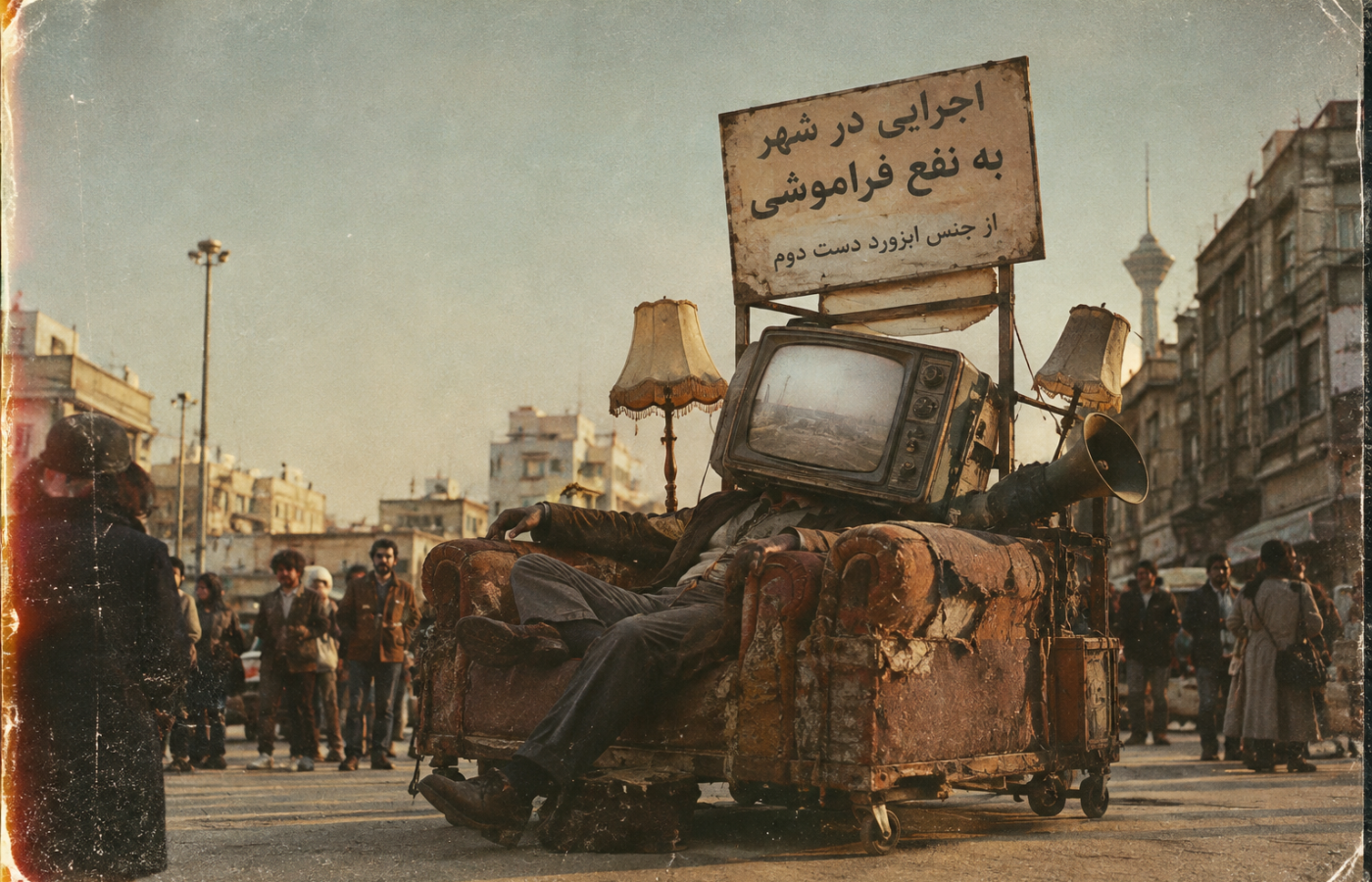
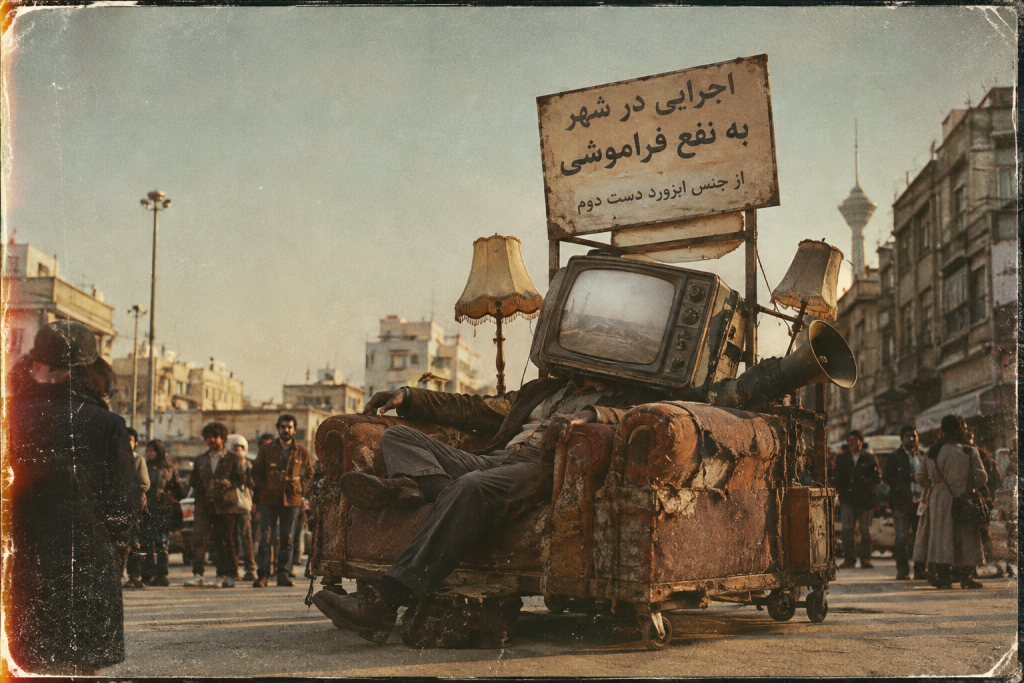
هر کس برای رسیدن به مقصد، هر طور که فکر میکند رانندگی میکند. مسئله اینجاست که چگونه این اجرا به مثابه رانندگی در شهر، به نفع فراموشی جمعی است. یعنی به جای اینکه شهر و آدمهایش، در خیابانِ نبوغ گام بردارند، راهی جز این ندارند که نبوغ را در خیابان به نفع بقا خرج کنند. این اجرا، البته به هیچ عنوان شبیه ژانر اکشن نیست بلکه کاملا تصویر دست دوم از ابزورد بکتی است که میتوان آن را بخشی از بقای ناخواسته به نفع فراموشی دانست. ما یادمان میرود که هستیم و چه کاری باید انجام دهیم. اگر مثلا در فلان جای دنیا یک نفر دارد، ماشین پرنده تولید میکند، ایرانیان به واسطه خاورمیانه ای بودن، دارند آن نبوغ را خرج رفت و آمد در خیابان میکنند و اصلا متوجه چنین اجرای سیزیف واری نیستند. زیرا آنقدر آن را تکرار میکنند که میپذیرند احتمالا همین یعنی قانون.
مثلا اگر دارم به دلیل کم بودن زمان، برخلاف مسیر خیابان میرانم، سایر رانندگانی که دارند مسیر درست را میرانند، موظف هستند من را ببینند و اجازه دهند با سلامت کامل از آنجا عبور کنم. این موضوع از نظر قانونی خلاف است اما خیابان به مردم یاد داده است تا این موضوع را از نظر عرفی و اخلاقی پیش ببرد. اخلاق و عذاب وجدان است که چنین جسارتی را در خیابان زنده نگه داشته است. در نتیجه نمیتوان چننین ماجرایی را درست و ایضا نادرست دانست. چون قوانین خیابانهای شهر، چنین اجرایی را الزامی میکند. درنتیجه باید پرسید که این اجرا، چگونه میتواند فراموشی را در یک شهر چند ده میلیونی برجسته کند.
پروندهای درباره سکس در نمایشنامهنویسی ایران (بخش اول)
سلوک دروغین در ساحت اجرا
همه چیز عادی و تلخ است. وجدان در چنین اجرایی حکم موتور محرک یک درام در پرفورمنس شهری است. بازیگران در چنین اجرایی، تکرار چنین رفتار و موقعیتی را از نظر تئوری استانیسلاوسکی در رسیدن به نقش پیش میبرند؛ بدون اینکه نام او را شنیده باشند. یعنی آنقدر تکرار میکنند یک رفتار را تا بدون آن نتوانند هویتی برای خود قائل باشند. این شروع یک قصهایست که روزانه دارد دست به تکرار میدهد. انگیزه این موضوع نیز رسیدن به مقصد است اما این مقصد میتواند پول را طلب کند یا خانه، یا هر چیز دیگری را.
وقتی به بطن ماجرا نگاه میکنیم، متوجه یک نوع سلوک دروغین میشویم که شهر و آدمهایش، به واسطه آن میتوانند بقا پیدا کنند. آنها برای چیزی میجنگند که تنها ضرورت زنده ماندن میتواند آن را معنا کند. وقتی چنین جنگی رخ میدهد، بازیگران این جنگ، به هیچ عنوان قصد ندارند موقعیتی که توی آن قرار دارند را بازی کنند؛ بلکه آن را به شکل کاملا غریضی به اجرا میرسانند. غریزه در اینجا معنای شکوفایی ذهن در برابر حمله رانندگان دیگر در یک شهر بی قانون است. یعنی آنقدر ذهن به تکرار میتواند شکوفا شود که دیگر انرژی برای او نمیماند که اجرای دیگر را پی بگیرد. چه میدانم مثلا مخترع شود، یک کاره ای شود که در یک جایی از دنیا بتواند رد پای خود را به دیگران بفروشد و در خاطره ها سو سو بزند.
مانند اجرای ایلان ماسک که امکان ندارد هر چند وقت یکبار یک کاری با تسلا ارا نکند و آن را به فناوری روز تجهیز نکند. انگار آینده فناوری از دریچه ماسک روی صورتها رخ خواهد داد. ماسکی که ایلان ماسک به چهره زده است بدون فکر کردن در مسیر بقا، درحالی که این ماسک در خیابانهای ایران به نحوی دیگر قابل مشاهده است. ماسکی که ایلان به صورت میزند تا رهبر فناوری جهان باشد، در حالی که این ماسک بر روی صورت ایرانیان کاملا دفرمه دیده میشود.
اجرایی در خیابان به نفع فراموشی
در نگاه نخست، شاید خیلی از ایرانیان به داشتن فرهنگی غنی و باسابقه شهره باشند اما این موضوع بیش از آنکه به اکنون مربوط باشد، جنبهای تاریخی-زمانی دارد و در اغلب موارد نمیتوان این فرهنگ غنی را به دنیای معاصر و کنونی ایرانیان تعمیم داد. آنچه در ساختار فرهنگی یک ملت تعیینکننده است، لزوم بازنویسی همان فرهنگ برای بازتولید در لحظه اکنون و آینده. با این حال، آیا میتوان چنین چیزی را در شرایط کنونی ایران مشاهده کرد؟
احتمالا همه ما به عنوان یک ایرانی قبول داریم که فرهنگ سرزمینی ما حاصل تمام مداخلات داخلی و خارجی است. آنچه ضرورت یافتن مفهوم فرهنگ را در یک سرزمین به وجود میآورد، فرهنگ گذر از چیزی است که ما آن را یک اتفاق تاریخی مینامیم. منظور از اتفاق تاریخی این است که ایرانیان در گذر از یک اتفاق بزرگ، به یاد میآورند که چه بودهاند، چه شدهاند و چگونه میتوانند آن را در مسیر تعالی سوق دهند.
یادآوری این موضوع برای ما به مفهوم یافتن چهرهای از سرزمینی است که از دیرباز، به ویژه طی چندین قرن اخیر، روی آرامش به مفهوم زیستن با آگاهی را ندیده است. این موضوع دریچه ورود ما به فرهنگ است؛ فرهنگی که میتواند تمام معیارهای مشخص و تاریخی را زیر سوال ببرد. از این نظر، چالش اصلی این است که در حال حاضر کجای این تاریخ قرار داریم؟ آیا زیست ایرانیان دچار تحول شده است یا همچنان درگیر پارادوکسهایی است که آنها را از یافتن خویش دور میکند؟
شمایلی از یک ابزورد دست دوم
حال میخواهم درباره این موضوع صحبت کنم که چرا اجرا در شهر، به مثابه رانندگی به شکل قانون جنگل، میتواند سطح فرهنگی ایرانیان را از موقعیت گذشته به ماقبل آن ببرد. یعنی به جای اینکه رانندگی بخشی از یک اتفاق روتین زندگی تعریف شود که زیست را آسودهتر سازد، به نظر میرسد ایرانیان برای زنده ماندن ناچارند خود را با قوانین جدید خیابان شرور تطبیق دهند. هرکس اگر برای یک بار هم که شده با موتور، ماشین یا دوچرخه در خیابانهای تهران تردد کند، متوجه میشود که قانونی در آن وجود ندارد و هرکسی، هر طور که بخواهد رفتار میکند. به ویژه پس از جنگ میان ایران و آمریکا، این موضوع تشدید شده است و عملا قانونی برای آن وجود ندارد. هرچند قبل از آن نیز وجود نداشت، مگر تحت شرایطی که قانونگذار، به درآمد اعمال قانون نیاز مبرم داشت.
در نتیجه، بر اساس تجربه شخصی من که با موتور در شهر رفت و آمد میکنم، متوجه شدم که برای زنده ماندن در خیابان باید تمام هوش و حواس خود را به این معطوف کرد که هر لحظه ممکن است از چهارسوی خیابان، یکی، دیگری یا من، ناچار به برخورد با یکی شویم. علت کاملا مشخص است؛ قانونی در این زمینه وجود ندارد یا اراده محکم برای اعمال قانون نیست و فرهنگ نیز در این زمینه، تمایلی به حضور ندارد. به طوری که فرهنگ، مانند خرسی در خیابان است که در خواب زمستانی به سر میبرد. حتی به خود زحمت نمیدهد که بیاید به تماشا بنشیند. هرچند اگر به واقع خرسی وجود داشت، هرگز زنده نبود. یا شاید به باور من خرس نیز تمایلی به بودن تحت چنین سازوکاری نخواهد بود.
از طرفی، هرکس برای رسیدن سریعتر به مقصد، هر طور که میخواهد، تحت حاکمیت گاز داد، بوق زدن، فریاد زدن از دهان و اگزوز، فرمان را به فراسوی خیابان میچرخاند. اما مسئله اینجاست که چگونه ماجرای رانندگی در شهر، به نفع فراموشی است؟ آیا این موضوع در تضاد با هوش جمعی است؟ یعنی به جای اینکه شهر و آدمهایش در خیابان، نبوغ خود را فراسوی یک روزمرگی ساده به کار بگیرند، راهی جز این ندارند که آن را در خیابان به نفع بقا خرج کنند؟
این اجرا، البته به هیچ عنوان شبیه ژانر اکشن نیست، بلکه شمایلی از یک ابزورد دست دوم است که میتوان از آن به عنوان بخشی از بقای ناخواسته به نفع فراموشی یاد کرد. ما یادمان میرود که چه هستیم و چه کاری باید انجام دهیم. منظورم دست یازیدن به یک کار شاق و کمرشکن نیست بلکه یادمان میرود که چرا حماقت خودمان را باید اینگونه در خیابان بی همه چیز مصرف کنیم.
اگر مثلا در فلان جای دنیا یک نفر دارد ماشین پرنده تولید میکند، یا ai دارد تمام هم و غم خود را بر یادگیری الگوهای انسانی جهت پیشی گرفتن از مکاشفه آن گذاشته است، ایرانیان به واسطه محتوم شدن در یک پلکان درگیری فرهنگی به نام و یاد مرده ای چون خاورمیانه، دارند همان نبوغ را خرج رفت و آمد در خیابان میکنند و اصلا متوجه چنین اجرای سوق الجیشی نیستند. زیرا آنقدر آن را تکرار میکنند که پذیرفته اند که بی قانونی، همانقانون است زیر سایه بلندی همچون اخلاق و عرف.
جاده یک طرفه، دو طرفه است
اگر به دلیل کم بودن زمان، برخلاف مسیر خیابان حرکت کنم، سایر رانندگانی که دارند مسیر درست را طی میکنند، چه بخواهند و چه نخواهند، موظف هستند من را ببینند و اجازه دهند از آن مسیری که حق ورود به آن را ندارم، عبور کنم. آنها باید اجازه دهند حتی اگر حق چنین اجازه ای را نداشته باشند. موضوع اجازه دادن آنها نیست بلکه آنها باید علاوه بر اینکه حواسشان باشد که به سایر وسایل نقلیه ای که دارند درست در خیابان حرکت میکنند، برخورد نکند، باید به سایر وسایلی که بر خلاف مسیر آن حرکت میکنند نیز توجه داشته باشند.
اینگونه است که یکی با خودش فکر میکند خب چرا باید وقتی دارم مسیر درست را میروم، یکی بیاید این مسیر را نقض کند؟ یعنی همزمان مجبورم به این فکر کنم که این جاده یکطرفه، دوطرفه است. درنتیجه رفتن در چنین مسیری، نیاز به تمرکز بسیار بالا دارد. بنابراین کسی که در چنین مسیری که حتی دارد درست حرکت میکند، گام برمیدارد، ناچار است که دو برابر و یا بیشتر، از تمرکز خود استفاده کند. چنین اجرایی باعث میشود او دیگر نای و توان این را نداشته باشد که حتی به چیزهای خیلی ساده فکر کند. اینجاست که پایان اجرا یعنی پایان همه چیز. پایانی که تمرکز را فقط در یک صورت امکان پذیر میکند: اینکه دوباره در خیابان خرج شود. چون این الگو اجازه نمیدهد که تمرکز در جای دیگر جاخوش کند. و این یک اتفاق کاملا غریضی است و نمیتوان آن را کاری کرد.
از طرفی، موضوع از نظر قانونی یک نوع خلاف است اما خیابان به مردم یاد داده است تا این موضوع را از نظر عرفی و اخلاقی، حل و فصل کنند. اخلاق و عذاب وجدان است که چنین خیانتی را در خیابان مشروع کرده است. در نتیجه نمیتوان چنین ماجرایی را به سادگی درست یا نادرست دانست، چون قوانین نانوشته خیابان در شهر، چنین اجرایی را الزامی میکند. در نتیجه، برای یافتن اینکه این اجرا چگونه میتواند فراموشی را در یک شهر چند ده میلیونی برجسته کند، باید به خود اجرا بازگردیم؛ به آنچه که هر روز رخ میدهد و در عین حال، به دلیل تکرار بیش از اندازه، دیگر به چشم نمیآید و سبک شده است.
همه چیز غیر عادی، عادی است
همه چیز عادی است اما زیر سایه تلخ خیابان. وجدان در چنین اجرایی حکم موتور محرک یکی از نمایشنامه های شکسپیر در پرفورمنس شهری را دارد. بازیگران در چنین اجرایی، تکرار این رفتارها و موقعیتها را از نظر تئوری استانیسلاوسکی پیرامون رسیدن به نقش پیش میبرند. یعنی آنقدر یک رفتار را تکرار میکنند تا به نقش اجرایی خود برسند. این شروع قصهای است که روزانه دارد تکرار میشود. انگیزه هم رسیدن به مقصد است اما این مقصد میتواند زیر سلطه پول، خانه، سکس یا هر چیز دیگری به تصویر کشیده شود.
وقتی به بطن ماجرا نگاه میکنیم، متوجه نوعی سلوک دروغین میشویم که شهر و آدمهای آن به واسطهاش میتوانند بقا پیدا کنند. آنها برای چیزی میجنگند که تنها ضرورت زنده ماندن میتواند انگیزه تکرار آن باشد. وقتی چنین جنگی زیر سایه چنین اجرایی رخ میدهد، بازیگران این جنگ به هیچ عنوان قصد ندارند موقعیتی را که در آن قرار دارند بازی کنند بلکه آن را به شکلی کاملا غریزی به پایان اجرا میرسانند.
غریزه در اینجا معنای شکوفایی ذهن در برابر حمله رانندگان دیگر در یک شهر بیقانون است. یعنی آنقدر ذهن در اثر تکرار، شکوفا میشود که دیگر انرژیای برایش باقی نمیماند تا کاری دیگر را دراندازند. چه میدانم، مثلا مخترع شود یا به کسی تبدیل شود که در جایی از دنیا بتواند رد پای خود را به دیگران بفروشد. فقط سایه هایی میمانند که در آسفالت خیابان پهن میشوند تا روز بعد. مانند اجرای ایلان ماسک که انگار امکان ندارد هر چند وقت یکبار کاری با تسلا نکند و آن را به فناوری روز تجهیز نسازد. انگار آینده فناوری از دریچه ماسک است که ظهور و بروز میکند؛ ماسکی که ایلان، ماسک و خیلی از پیشقراولان فناوری در جهان به چهره زده اند؛ بدون اینکه مجبور باشند تمام هوش و حواس خود را صرف زنده ماندن در خیابان کنند. زیرا اصلا برای آنها تعریف نشده است که رفت و آمد در خیابان میتواند انرژی آنها را برباید. رفت و آمد در خیابان برای آنها چیزی جز تفریح کردن نیست. برای این است که با تغییر خودرو و مجهز کردن آن به تازه ترین تکنولوژی روز، ترکیبی از خودنمایی و تفریح در مواجهه با سایر سواریهای خیابان را به نمایش میگذارند. به نوعی خیابان یک شو بزرگ است که آنها با پوشش خودرو، دارند در آنجا کتواک میکنند. کتواکی که هم لذت بصری دارد هم آسودگی. بنابراین هرگز موضوع از دریچه بقا تعریف نمیشود. چیزی که در ایران و به ویژه پای سیب آن (تهران)، کاملا برعکس است. ترافیک و مقدار بیش از اندازه وسایل نقلیه به حدی است که اجازه کتواک به صاحبان وسایل نقلیه را نمیدهد. آسودگی جای خود را به کلافگی داده است. بنابراین ما با یک اجرای به شدت کسل کننده، خسته و کلافه طرف هستیم که همه برای رهایی از آن، راهی جز زیر پا گذاشتن همان قانون را ندارند.
یا اینجا یا هیچ جای دیگر
در اینجا با یک تناقض آشکار مواجه میشویم. از یک سو، انسان معاصر به دنبال ساختن آینده است و از سوی دیگر، انسان ایرانی درگیر بازتولید موقعیتی است که او را از آینده دور میکند. مسئله صرفا این نیست که چرا یک نفر بر خلاف خیابان حرکت میکند یا چرا رانندهای بدون توجه به حق تقدم دیگری، مسیر خود را ادامه میدهد. مسئله این است که چگونه یک وضعیت استثنایی به یک وضعیت دائمی از یک بحرانی تبدیل میشود. اینکه چگونه آنچه قرار بود یک تخلف باشد، به بخشی از قواعد زندگی روزمره بدل میشود. در چنین شرایطی، دیگر کسی نمیپرسد چرا این اتفاق میافتد و چرا باید تمام تمرکزم در چنین اجرایی مصرف شود، بلکه همه میپرسند چطور میتوان از این اجرا جان سالم به در برد. درنتیجه تمرکز میشود یک موهبت که اگر اینجا خرج نشود، هرگز امکان خرج آن در جای دیگر فراهم نخواهد شد. یا اینجا یا هیچ جای دیگر. به همین سادگی، تمرکز در جایی اجرا میشود که نباید. اما این نباید یک ضرورت است. ضرورتی که بند آن به بقا و زنده ماندن وصل میشود. تراژدی-ابزورد اصطلاح جالبی برای چنین رخدادی است. هم میتوان برای آن غمی ابدی داشت و هم میتوان آن را در مسیر یک روزمرگی، نادیده گرفت. زیرا اجرا هم ما را نادیده میگیرد. هر دو بند ناف یکدیگرند برای بقا و ادامه دادن. تا جایی که نمیشود فهمید چقدر زمان به راحتی میتواند در این اجرا دزدیده شود. اینجا دزد پرفورمرها نیستند بلکه سازوکاری نامعلوم است که به آن ترافیک میگویند. پرفورمرها همان بازیگران ابله داستایفسکی هستند. بنابراین ترافیک حکم معشوقی را دارد که عاشق برای آن جان میدهد. این جمله را چند بار بخوانید تا به عمق این اجرا پی ببرید.
به نظر میرسد که خیابان در اینجا، از کارکرد اولیه خود فاصله گرفته است. خیابان قرار بود محیطی برای عبور و مرور باشد؛ مکانی که در آن، حرکت افراد مختلف بر اساس مجموعهای از قواعد مشترک امکانپذیر میشود. اما حالا به صحنهای بدل شده که در آن هر فرد ناچار است قواعد را به صورت لحظهای از نو بسازد. منظورم این است که با عبور از یک بحران، باید منتظر عبور از بحران واپسین بود. اگر نتوانستم در این خیابان بمیرم، احتمالا باید سعی کنم در خیابان بعدی نیز زنده بمانم. تمرکز در این مسیر به یغما میرود. هر راننده ای باید در کسری از ثانیه تصمیم بگیرد که دیگری در این اجرا چه واکنشی نشان خواهد کرد، از کدام سوی خیابان وارد میشود، آیا توقف میکند یا خیر؟ دیالوگ دارد یا خیر؟ آیا از گذشته نقش خود خبردار است؟ آیا چراغ راهنما را میبیند یا خیر؟ آیا به حق تقدم دیگری احترام میگذارد یا اینکه با تکیه بر حماقت خود، مسیر را تصاحب میکند تا با افتخار در این مسیر بمیرد. اصلا کارگردان این اجرا کیست؟ مهم نیست. در چنین موقعیتی، ذهن به جای اینکه برای خلق چیزی تازه به کار گرفته شود، ابزاری ست برای پیشبینی خطر.
این همان نقطهای است که میتوان آن را به فراموشی متصل کرد. فراموشی در اینجا به معنای از دست دادن حافظه تاریخی یا ناتوانی در به یاد آوردن گذشته نیست بلکه به معنای فراموش کردن امکان دیگری برای زندگی در چنین اجرایی است. ما فراموش میکنیم که می توان به شکلی دیگر حرکت کرد، می توان بدون ترس از برخورد با دیگری به مقصد رسید و می توان بخشی از یک نظم مشترک بود، بدون آنکه مجبور شد هر لحظه برای حفظ جایگاه خود در این اجرا جنگید. فراموشی، زمانی اتفاق میافتد که یک وضعیت موقت-استثنائی، آنقدر تکرار شود که دیگر امکان تصور وضعیتی متفاوت، به ناممکنها بپیوندد.
در واقع، این اجرا به نفع فراموشی عمل میکند. زیرا به تدریج حافظه جمعی ما را از امکان نظم خالی میسازد. ما نه تنها قانون را فراموش میکنیم، بلکه حتی به یاد نمیآوریم که چرا به قانون نیاز داشتهایم. البته این اجرا به مرور قانون خودش را میباید. قانونی که قرار است تمرکز را از چیزهای مهم به بقا در خیابان ببرد. به طوری که قانون در اینجا دیگر چیزی نیست که بتواند زندگی را برای همه قابل پیشبینی کند بلکه به مانعی تبدیل میشود که باید از آن عبور کرد تا به مقصد رسید. رسیدن به مقصد یعنی تمام چیزی که زندگی از پرفورمرهای توی خیابان میخواهد.
از این نظر، تخلف دیگر نقض قانون نیست بلکه نوعی سازگاری با موقعیتی است که در آن رعایت قانون ممکن است فرد را در معرض خطر قرار دهد. رانندهای که میخواهد قانون را رعایت کند، گاهی ناچار است به جای اعتماد به نظم، به هوشیاری دائمی خود اعتماد کند. او باید همواره آماده باشد تا خطای دیگری را جبران کند؛ خطایی که ممکن است در هر لحظه تکرار شود و جبرانی که دیگر مفهوم جبران ندارد و یک وظیفه نانوشته اخلاقی-عرفی است. حتی اگر پرفورمر مقصر نباشد.
هزاران اینکه در خیابان
در این بین، اخلاق نیز شکل دیگری به خود میگیرد. دیگر الزاما به معنای احترام به دیگری نیست و گاهی یعنی تحمل کردن خطای دیگری. راننده ای که خلاف جهت خیابان حرکت میکند، از دیگران انتظار دارد که برای جلوگیری از برخورد، راه را برای او باز کنند. او ممکن است حتی در همان لحظه، رفتار خود را با ضرورتی اخلاقی توجیه کند. اینکه عجله دارد، اینکه باید به کاری برسد، این مریض دارد، اینکه قرار است پس از سالها به سکس برسد، اینکه قرار است پول وام سر ماه خود را جور کند و هزاران اینکه. اما آیا این ضرورت می تواند حق دیگری را از او بگیرد؟ و اگر همه افراد شهر چنین ضرورتی داشته باشند، چه چیزی از زندگی مشترک در این اجرای خیابانی باقی میماند؟ آیا اصلا خانه در چنین زندگی معنا دارد؟
این پرسشها زمانی پیچیدهتر میشوند که بدانیم بسیاری از افراد تحت چنین موقعیتهایی لزوما خود را مقصر نمیدانند. آن ها ممکن است بدانند که رفتارشان برخلاف قانون است اما در عین حال احساس کنند که در شرایط موجود چاره دیگری ندارند. اجرا از آنها میخواهد که اینگونه بازی کنند وگرنه حذف میشوند. بنابراین برای حذف نشدن، باید تمام تمرکز خود را در این اجرا خرج کنند. حتی اگر دیگر نتوانند در جای دیگر از تمرکز استفاده کنند. به این ترتیب، وجدان به جای آنکه مانع رفتار نادرست شود، به ابزاری برای توجیه آن تبدیل میشود. فرد از درون خود آگاه است که نباید چنین رفتاری در چنین اجرایی داشته باشد اما الزامات اجرایی به او اجازه می دهد که برخلاف این آگاهی عمل کند. در نتیجه، وجدان نه از بین می رود و نه به طور کامل فعال می ماند بلکه در وضعیتی معلق قرار می گیرد؛ وضعیتی که در آن، فرد همزمان میداند و نمیداند، همزمان احساس مسئولیت میکند و از مسئولیت خود گریزان است. این تنقاضات است که شیوه اجرایی این اجرا را در خیابانهای شهر شکل میدهد.
این تعلیق اخلاقی همان چیزی است که میتواند درام این اجرا را به وجود آورد. در یک درام متعارف، شخصیتها با مسئلهای مواجه میشوند که باید برای حل آن تصمیم بگیرند یا خود را در نقطه مقابل انتخاب قرار دهند. اما در اینجا، مسئله هیچگاه حل نمیشود که حاصل انتخاب یا تصمیمی باشد. هر روز همان موقعیت تکرار میشود، هر روز فردی عجله دارد، هر روز رانندهای راه دیگری را میبندد و هر روز کسی مجبور میشود برای جلوگیری از یک برخورد، تصمیمی تازه بگیرد. هیچ نقطه پایانی وجود ندارد. مقصدها عوض میشوند، آدمها تغییر میکنند، وسایل نقلیه متفاوت میشوند، اما ساختار اجرا همچنان پابرجاست.
سیزیف، ایران، خیابان
خیابان به صحنهای ابزورد تبدیل میشود؛ صحنهای که در آن بازیگران بدون آنکه بدانند در حال اجرای چه چیزی هستند، هر روز نقش خود را با افتحار از نو تکرار میکنند. آنها دیالوگ مشخصی ندارند، حتی کارگردانی وجود ندارد و هیچکس نیز مسئولیت پایان دادن به نمایش را بر عهده نمیگیرد. با این حال، همه چیز از یک نظم پنهان پیروی میکند. نظمی که بر اساس آن، هرکس باید خودش را با بینظمی دیگری تطبیق دهد. این همان تناقضی است که این اجرا را زنده نگه میدارد. بینظمی در ظاهر وجود دارد اما در باطن، نوعی نظم نانوشته از دل آن بیرون آمده است؛ نظمی که بقای خود را مدیون تکرار رفتارهایی است که قرار بود از آن جلوگیری کند.
در اینجا میتوان به مفهوم سیزیف بازگشت. سیزیف محکوم است سنگی را به بالای کوه ببرد و هر بار شاهد سقوط دوباره آن باشد. در خیابانهای شهر نیز راننده هر روز تلاش میکند به مقصد برسد، اما رسیدن به مقصد به معنای پایان نیست. دوباره باید یک عده پرفورمر را از همان مسیر برگرداند و دوباره تعدادی دیگر را به همان نقطه بیاوردو. روز بعد، همان اجرا دوباره تکرار میشود. انگیزه او چیست؟ پول و درنهایت سکس. او دوباره باید از میان خطرها عبور کند، دوباره باید رفتار دیگران را پیشبینی و دوباره باید تمام توان ذهنی خود را برای زنده ماندن به کار بگیرد. تفاوت در این است که سیزیف دست کم از وضعیت خود آگاه است اما بازیگران این پرفورمنس شهری ممکن است دیگر متوجه تکرار بیپایان نقش خود نباشد. او سنگ را هل میدهد، اما فراموش کرده است که چرا این کار را انجام میدهد و آیا اساسا راه دیگری برای حرکت وجود دارد.
در چنین وضعیتی، فراموشی به یک انتخاب آگاهانه تبدیل نمیشود بلکه نتیجه طبیعی تکرار است. انسان برای آنکه بتواند در شرایط دشوار به زندگی ادامه دهد، به رفتارهای خاصی عادت میکند. این عادتها در ابتدا شاید صرفا راهحلهایی موقت برای عبور از یک موقعیت خطرناک باشند، اما به تدریج به بخشی از شخصیت فرد تبدیل میشوند. او دیگر فقط در نبود قانونی مشخص در خیابان رانندگی نمیکند، بلکه به تدریج جهان را نیز بر اساس همان منطق میفهمد، آپلود و ذخیره میکند. اینکه باید زودتر حرکت کرد، باید از دیگری پیشی گرفت، باید پیش از آنکه دیگری جای تو را بگیرد، جای او را تصاحب کرد. به این ترتیب، خیابان از یک فضای فیزیکی فراتر میرود و به الگویی برای فهم روابط اجتماعی تبدیل میشود.
شاید مسئله اصلی همین باشد که این اجرا فقط در خیابان اتفاق نمیافتد. خیابان، شکل آشکار و قابل مشاهدهتر وضعیتی است که ممکن است در بخشهای دیگر زندگی نیز تکرار شود. وقتی فرد یاد میگیرد که برای رسیدن به مقصد، باید قواعد را دور بزند، این پرسش مطرح میشود که آیا همان منطق در محیط کار، روابط اجتماعی، در اقتصاد و حتی در شیوه مواجهه با آینده نیز بازتولید نمیشود؟ آیا ممکن است ما در موقعیتهای مختلف زندگی، به بازیگرانی تبدیل شویم که برای حفظ موقعیت خود، ناچار هستیم همان رفتارهایی را تکرار کنیم که در نهایت امکان ساختن یک زندگی بهتر را از بین ببرد؟
البته نمیتوان صرفا به دلیل وجود چنین اجرایی نتیجه گرفت که ایرانیان فاقد فرهنگ هستند یا اینکه تمام رفتارهای آنها را میتوان به یک ویژگی ملی نسبت داد. مسئله برعکس است. پرسش این است که آیا فرهنگ در چه اجرایی امکان ظهور پیدا میکند؟ چه زمانی ساختار زندگی روزمره، آن را به حاشیه میراند؟ اگر فردی در خیابان برای رعایت قانون به اعتماد متقابل نیاز داشته باشد، اما هر روز با موقعیتی مواجه شود که این اعتماد را از او سلب میکند، چگونه میتوان از او انتظار داشت که بدون هیچ پشتوانه ای به همان رفتار ادامه دهد؟ در اینجا مسئله لزوما اخلاق فردی نیست بلکه شرایطی است که اخلاق را به امکانی دشوار و گاهی پرهزینه بدل میسازد.
از اینرو، بازگشت به فرهنگ نمیتواند به معنای ستایش گذشته باشد. داشتن تاریخ طولانی، آثار هنری ارزشمند یا خاطره تمدنهای بزرگ، به خودی خود تضمین نمیکند که یک جامعه در این اجرا نیز بتواند بر اساس همان ارزشها، نقش خود را به نمایش بگذارد. فرهنگ زمانی زنده است که بتواند در رفتارهای روزمره بازتولید شود. زمانی که در یک چهارراه، در لحظه تصمیمگیری برای عبور یا توقف، در احترام به حق دیگری و در پذیرش محدودیتهای مشترک معنا پیدا کند. اگر این امکان از بین برود، فرهنگ به خاطرهای یاوه گو تبدیل میشود که میتوان درباره آن سخنرانی بسیار کرد اما نمیتوان ضرورتا آن را در زندگی روزمره مشاهده کرد.
به همین دلیل، شاید لازم باشد به جای آنکه از خود بپرسیم چرا فرهنگ ایرانی چنین سابقه درخشانی دارد، بپرسیم چرا این فرهنگ در برخی موقعیتهای روزمره نمیتواند به رفتاری مشترک تبدیل شود. چه اتفاقی افتاده است که هوش فردی، به جای آنکه در خدمت ساختن امکانهای تازه قرار بگیرد، برای عبور از خطرهای تکراری مصرف میشود؟ چه چیزی در ساختار زندگی ما وجود دارد که انسان را از اندیشیدن به آینده بازمیدارد و او را وادار میکند تمام انرژی خود را صرف مدیریت لحظه اکنون اجرا کند؟
در اینجا، بار دیگر میتوان به ایلان ماسک بازگشت. نه برای آنکه او را به الگویی بینقص از آیندهسازی تبدیل کنیم، بلکه برای آنکه تفاوت میان دو نوع مصرف هوش را ببینیم. یک نوع هوش، امکان تازهای را تصور میکند و برای تحقق آن دست به ساختن آویزان میشود. نوع دیگر، در مواجهه با شرایطی که مدام تکرار میشوند، به دنبال راهی برای عبور از آن است. اولی میخواهد شرایط را تغییر دهد، دومی باید خود را با شرایط تغییرناپذیر تطبیق دهد. البته این دو نوع هوش از دو انسان متفاوت سرچشمه نمیگیرند بلکه ممکن است در یک انسان نیز هر دو وجه وجود داشته باشد. مسئله این است که کدام ساختار اجتماعی به یکی از آنها میدان بیشتری میدهد که یکی رجز را به ابتدای رجز بعدی متصل میکند و یکی دیگر، رجز را برای خاتمه دادن به قاعده رجزخوانی مصرف میکند.
تخیل میمیرد
وقتی بخش بزرگی از توان ذهنی انسان صرف پیشبینی رفتارهای خطرناک دیگران میشود، فرصت کمتری برای تخیل، ساختن و تجربه کردن در اجرایی که به واگذار شده باقی میماند. این به آن معنا نیست که آن فرد دیگر نمیتواند خلاق باشد، بلکه به این معناست که خلاقیت او در مسیری صرف میشود که حقیقتا چیزی برای عرضه ندارد. او ممکن است در رانندگی به مهارتی خارقالعاده برسد، بتواند در کسری از ثانیه چندین احتمال را محاسبه و از موقعیتهایی عبور کند که برای دیگری غیرممکن به نظر میرسند. اما پرسش این است که این مهارت در نهایت چه چیزی را تولید میکند؟ آیا فقط امکان ادامه همان وضعیت را فراهم میکند یا میتواند به تغییری در خود وضعیت اجرایی منجر شود؟
این همان نقطه ای است که پرفورمنس شهری به مسئلهای فراتر از رانندگی تبدیل میشود. ما با اجرایی مواجه هستیم که در آن، تواناییهای انسان به شکلی متناقض شکوفا میشوند. ذهن برای بقا خلاق میشود، اما همین خلاقیت ممکن است امکان خروج از وضعیت بقا را محدود کند. فرد هر روز بهتر یاد میگیرد که چگونه در بینظمی حرکت کند، اما این یادگیری لزوما به او کمک نمیکند تا نظمی نو بسازد. او در اجرایی که صرفا برای عبور و مرور تعریف شده حرفهایتر میشود، بدون آنکه الزاما بتواند از نقش خود خارج شود.
از این منظر، عنوان اجرایی در شهر به نفع فراموشی به یک وضعیت دوگانه اشاره دارد. از یک طرف، شهر محل بروز حافظه جمعی است. جایی که قواعد، عادتها و شیوههای زیستن در کنار یکدیگر شکل میگیرند. از طرف دیگر، همین شهر میتواند به فضایی تبدیل شود که در آن، تکرار روزمره امکان به یاد آوردن را از بین میبرد. ما هر روز به خیابان میآییم، رفتارهای مشابهی را تکرار میکنیم و به خانه بازمیگردیم، بیآنکه از خود بپرسیم این تکرار چه چیزی را از ما گرفته است. گویی شهر به جای آنکه حافظه ما را زنده نگه دارد، به دستگاهی برای فراموش کردن تبدیل شده است.
اما آیا میتوان از این اجرا خارج شد؟ آیا بازیگر میتواند ناگهان از نقش خود فاصله بگیرد و متوجه شود که آنچه طبیعی میپنداشته، تنها نتیجه تکرار یک وضعیت تاریخی و اجتماعی است؟ شاید نخستین امکان تغییر، نه در یافتن یک راه حل قطعی، بلکه در دیدن خود اجرا باشد. بنظر میرسد حتی برشت هم وقتی فاصله گذاری را تعریف کرد، تصور نمیکرد یک روزی در یک جایی، عده ای حاضر نباشند از نقش خود فاصله بگیرند. زیرا فاصله گرفتن از این نقش، نتیجه ای جز مرگ به همراه نخواهد داشت. بنابراین تا زمانی که رفتارهای ما طبیعی و بدیهی به نظر میرسند، امکان پرسش از آنها محدود است. درنتیجه وقتی متوجه میشویم که هر روز در حال بازتولید یک موقعیت مشخص هستیم، شاید بتوانیم برای لحظهای از نقش خود فاصله بگیریم و به این فکر کنیم که آیا باید آن را ادامه دهیم یا خیر؟
این فاصله گرفتن، به معنای انکار ضرورتهای زندگی نیست. نمیتوان از کسی که برای رسیدن به محل کار، تامین هزینههای زندگی یا مراقبت از خانوادهاش ناچار است در خیابانهای شهر حرکت کند، انتظار داشت که به تنهایی تمام ساختار موجود را تغییر دهد. مسئله این است که آیا میتوان از دل همین تجربههای روزمره، امکان دیگری برای فهم زندگی مشترک پیدا کرد؟ آیا میتوان به یاد آورد که دیگری، پیش از آنکه مانعی برای رسیدن ما به مقصد باشد، انسانی است که او نیز میخواهد به مقصد برسد؟ آیا میتوان خیابان را دوباره به فضایی تبدیل کرد که در آن، رسیدن یک نفر مستلزم به خطر انداختن دیگری نباشد؟
هوش، اخلاق و خلاقیت را نجات دهیم
شاید این پرسشها ساده به نظر برسند، اما در واقع به یکی از بنیادیترین مسائل فرهنگ مربوط میشوند. اینکه چگونه میتوان از زندگی فردی به زندگی مشترک رسید، بدون آنکه فردیت انسانها از بین برود. فرهنگ در این معنا، مجموعهای از نشانههای تاریخی یا خاطرات پرافتخار نیست، بلکه توانایی ساختن قواعدی است که امکان زیستن در کنار یکدیگر را فراهم میکنند. این قواعد زمانی معنا دارند که افراد بتوانند به وجودشان اعتماد کنند و بدانند که رعایت آنها به معنای قرار گرفتن در موقعیتی ضعیفتر نیست.
در نهایت، شاید آنچه در خیابانهای پایتخت ایران شاهد آن هستیم، نه یک بحران در رانندگی، بلکه بحرانی در تصور ما از زندگی مشترک است. اجرایی که هر روز تکرار میشود، به ما نشان میدهد که چگونه انسان میتواند برای بقا، تمام ظرفیتهای ذهنی خود را به کار بگیرد و در همان حال، امکان دیگری که همان خودش باشد، برای زندگی را فراموش کند. او زنده میماند، به مقصد میرسد و روز بعد دوباره به خیابان بازمیگردد. اما در این میان، چیزی از دست میرود که به سادگی قابل اندازهگیری نیست. امکان اینکه هوش، اخلاق و خلاقیت او در مسیری فراتر از بقا به کار گرفته شوند.
شاید تلخترین بخش این اجرا همین باشد که هیچکس قصد ندارد در آن بازیگر یا پرفورمر تعریف شود. هیچکس صبح از خواب بیدار نمیشود تا نقش انسانی را بازی کند که در یک شهر فاقد قانون برای زنده ماندن تلاش میکند. همه فقط میخواهند به مقصد برسند. اما درست در همین نقطه است که اجرا شکل میگیرد. در فاصله میان آنچه میخواهیم انجام دهیم و آنچه شرایط ما را وادار به انجامش می سازد. ما قصد اجرای یک نمایش را نداریم، اما هر روز آن را اجرا میکنیم. ما قصد فراموش کردن را نداریم، اما هر روز چیزی را به باد فراموشی میسپاریم.
درنهایت وقتی یک جامعه آنقدر درگیر زنده ماندن میشود که فرصت اندیشیدن به شیوه زندگی خود را از دست میدهد، چه چیزی از فرهنگ آن باقی میماند؟ آیا میتوان همچنان از تمدن، تاریخ و نبوغ سخن گفت، وقتی بخش بزرگی از این نبوغ باید صرف پیشبینی برخورد بعدی شود؟ آیا ممکن است ما نه به دلیل نداشتن استعداد، بلکه به دلیل مصرف شدن استعدادهایمان در چرخهای بیپایان از بقا، از آینده فاصله گرفته باشیم؟
شاید خیابان همان جایی است که این پرسش باید از نو مطرح شود. نه به این دلیل که همه مسائل جامعه در خیابان خلاصه میشوند بلکه به این دلیل که خیابان، هر روز و پیش چشم همه، نتیجه یک زندگی مشترک را به نمایش میگذارد. در اینجا، فراموشی دیگر اتفاقی نیست که در گذشته رخ داده باشد؛ اجرایی است که در لحظه اکنون ادامه دارد. اجرایی بدون پرده آخر، بدون تشویق تماشاگران و بدون تضمین اینکه روزی به پایان خواهد رسید.
ما همچنان حرکت میکنیم، همچنان به مقصد میرسیم و فردا دوباره باشکوه تر از روز قبل، به خیابان بازمیگردیم. شاید تنها تفاوت این است که اگر روزی بتوانیم این تکرار را ببینیم، اگر بتوانیم برای لحظهای از نقش خود فاصله بگیریم، شاید دیگر مجبور نباشیم تمام هوش و نبوغ خود را صرف ادامه دادن آن کنیم. شاید آن روز بتوانیم به یاد بیاوریم که زندگی قرار نیست در معنای زنده ماندن مصرف شود. دیر یا زود خودتان را از این شکوه فراموشی ناتمام در خیابانهای شهر، نجات دهید، پیش از آنکه مرگ شما را طلب کند.
A Performance in the City in the Service of Forgetting: A Second-Hand Absurdity
At first glance, many Iranians may be renowned for possessing a rich and long-standing culture. Yet this is largely a matter of historical legacy, and in most cases, this rich culture cannot simply be extended to the contemporary world of Iranians today. What determines the cultural structure of a nation is the necessity of rewriting that culture so that it can be reproduced in the present moment and carried into the future. But can we observe such a process under the current conditions in Iran?
As Iranians, we probably all agree that the culture of our land is the product of all kinds of internal and external interventions. What makes it necessary to seek out the meaning of culture within a land is the culture of moving beyond what we call a historical event. By a historical event, I mean an event of such magnitude that, in passing through it, Iranians remember who they have been, what they have become, and how they might set that experience in motion along the path ahead. For us, remembering this means discovering the face of a land that, for a long time—particularly over the past several centuries—has not known peace in the sense of living with awareness.
This is the gateway through which culture enters: a culture capable of questioning all established and historical criteria. From this perspective, the central challenge is determining where we currently stand within this history. Has Iranian life undergone an uneven transformation, or does it remain caught in paradoxes that prevent Iranians from finding themselves?
Performance in the City as Driving Under the Law of the Jungle
I now want to discuss why performance in the city, understood as driving under the law of the jungle, can push the cultural condition of Iranians from the position of the past to a point even more primitive than the past itself. Instead of driving being defined as a routine part of life that makes existence more comfortable, Iranians seem compelled to adapt to the street’s new rules simply in order to survive.
Anyone who has driven a motorcycle, car, or bicycle through the streets of Tehran, even once, will realize that there is no law governing them. Everyone drives however they please. This situation has become even worse, particularly following the war between Iran and the United States. In practice, there appears to be no law to enforce—or perhaps there is simply no will to enforce it.
Based on my personal experience of commuting through the city by motorcycle, I have come to understand that surviving on the streets requires directing all one’s attention toward the possibility that, at any moment, someone coming from any of the four directions might collide with you, or you with them. There is no law, and culture is of no help in this regard.
Everyone drives however they think best in order to reach their destination as quickly as possible. The question, however, is how this performance of driving through the city serves collective forgetting. Instead of the city and its inhabitants directing their ingenuity toward the broader possibilities of life, they have no choice but to expend that ingenuity on the streets in the service of survival.
This performance is by no means comparable to the action genre. Rather, it is an image of Beckettian absurdity in second-hand form, something that can be understood as a part of involuntary survival in the service of forgetting. We forget who we are and what we ought to be doing.
While someone somewhere in the world may be developing a flying car, Iranians, confined by their position in the Middle East, are expending that same ingenuity on getting from one place to another through the streets. They remain entirely unaware of this Sisyphean performance because they repeat it so often that they eventually accept it as the law itself.
For example, if I drive against the flow of traffic because I am short on time, other drivers who are traveling in the correct direction are expected to see me and allow me to pass safely. Legally, this is a violation. Yet the street has taught people to resolve the situation according to customary and moral expectations.
It is morality and a sense of guilt that keep this audacity alive on the streets. Consequently, the situation cannot simply be judged as either right or wrong. The unwritten rules of the city’s streets make this performance seem necessary. We must therefore ask how such a performance can bring forgetting to the foreground in a city of tens of millions.
A False Asceticism Within the Realm of Performance
Everything is ordinary and bitter. In this performance, conscience acts as the driving force behind an urban performance drama. The performers reproduce these behaviors and situations through the process of arriving at a role described in Stanislavski’s theory, without ever having heard his name.
They repeat a behavior so often that they can no longer imagine an identity for themselves without it. This is the beginning of a story that repeats itself every day. Its motivation is reaching a destination, but that destination may demand money, a home, or any number of other things.
When we look at the heart of the matter, we encounter a kind of false asceticism through which the city and its inhabitants manage to survive. They struggle for something whose only meaning lies in the necessity of staying alive.
When this struggle takes place, its performers do not intend to act out the situation in which they find themselves. Instead, they enact it almost instinctively. Here, instinct means the mind’s capacity to flourish in response to attacks from other drivers in a lawless city.
The mind becomes so developed through repetition that it has no energy left to pursue another performance. What do I know? Perhaps it might otherwise become an inventor, or someone capable of selling their own contribution to the world somewhere else and leaving a faint trace in its memory.
Consider Elon Musk’s performance. It seems impossible for him to go very long without doing something with Tesla, equipping it with the latest technology. It is as though the future of technology will appear on people’s faces through Musk’s mask.
Musk wears a mask that allows him to lead global technology without having to think constantly about survival. In Iranian streets, however, that same mask appears in a different, distorted form.
A Street Performance in the Service of Forgetting
At first glance, many Iranians may be renowned for possessing a rich and long-standing culture. Yet this has more to do with historical time than with the present, and in most cases, that rich culture cannot simply be extended to the contemporary lives of Iranians today. What determines a nation’s cultural structure is the necessity of rewriting its culture so that it can be reproduced in the present and the future. But can this be observed under Iran’s current conditions?
As Iranians, we probably all agree that the culture of our land is the product of internal and external interventions. What makes it necessary to seek out the meaning of culture within a land is the process of moving beyond what we call a historical event. By this, I mean that, in passing through a major event, Iranians remember who they have been, what they have become, and how they might direct that experience toward further development.
Remembering this means discovering the face of a land that, for a long time, particularly over the past several centuries, has not known peace in the sense of living consciously. This is our gateway into culture: a culture capable of questioning all established historical criteria.
From this perspective, the central challenge is determining where we currently stand within this history. Has Iranian life undergone a transformation, or does it remain caught in paradoxes that prevent people from finding themselves?

The Image of a Second-Hand Absurdity
I now want to discuss why performance in the city, understood as driving according to the law of the jungle, can push the cultural condition of Iranians from the position of the past to something even more primitive than the past itself.
Instead of driving being defined as an ordinary part of life that makes existence easier, Iranians seem compelled to adapt to the new rules of a hostile street simply to stay alive.
Anyone who has traveled through Tehran’s streets by motorcycle, car, or bicycle will realize that there is no law governing them. Everyone behaves however they please. This situation has intensified, particularly following the war between Iran and the United States. In practice, there is no effective law governing this behavior. Even before that, however, such laws scarcely existed, except when those responsible for enforcement urgently needed the revenue generated by enforcing them.
Based on my personal experience of commuting through the city by motorcycle, I have realized that surviving on the streets requires devoting all one’s attention to the possibility that, at any moment, someone—or I myself—might collide with someone else coming from any direction.
The reason is clear: either there is no law in this regard, or there is no firm will to enforce it. Culture, too, shows little inclination to intervene. Culture resembles a bear sleeping in hibernation in the middle of the street. It does not even bother to come out and watch. And if such a bear really existed, it would never survive. Or perhaps, as I see it, the bear would have no desire to exist within such a system in the first place.
Meanwhile, everyone turns the steering wheel toward the farthest reaches of the street, governed by acceleration, honking, and shouting from both mouths and exhaust pipes, all in pursuit of reaching a destination faster.
But the question is this: how does driving in the city serve forgetting? Does it stand in opposition to collective intelligence? Instead of the city and its inhabitants putting their ingenuity to work beyond the simplest routines of everyday life, are they left with no choice but to expend it on the streets in the service of survival?
This performance is by no means comparable to the action genre. Rather, it is the image of a second-hand absurdity, which can be understood as a form of involuntary survival in the service of forgetting.
We forget what we are and what we ought to be doing. I do not mean undertaking some Herculean or backbreaking task. I mean that we forget why we should consume our own stupidity in this way, on streets stripped of everything.
If someone somewhere in the world is developing a flying car, or if AI is devoting all its efforts to learning human patterns in order to surpass human discovery, Iranians—confined to a cultural hierarchy of conflict associated with the name and memory of a dead entity called the Middle East—are expending that same ingenuity on getting around the streets.
They remain unaware of this strategically organized performance because they repeat it so often that they have accepted lawlessness as the law itself, under the broad shadow of morality and custom.
A One-Way Road Is a Two-Way Road
If I travel against the flow of traffic because I am short on time, the other drivers traveling in the correct direction must, whether they want to or not, notice me and allow me to pass through a route into which I have no right to enter.
They must let me through, even though they have no right to grant such permission. The issue is not whether they choose to allow me to pass. Rather, in addition to watching out for other vehicles traveling correctly along the street, they must also watch out for vehicles traveling in the opposite direction.
This is how someone comes to think: Why should someone violate the road when I am traveling correctly along it? In other words, I am simultaneously forced to think of this one-way road as a two-way road.
Traveling along such a road therefore requires an exceptionally high level of concentration. Anyone moving along it, even while doing everything correctly, must expend twice as much concentration, or more.
This performance leaves people without the energy or capacity to think about even the simplest things. Here, the end of the performance becomes the end of everything: a conclusion in which concentration can be used in only one way—by being spent on the street again.
The pattern does not allow concentration to settle anywhere else. This is an entirely instinctive process, and there is seemingly nothing one can do about it.
From a legal perspective, this behavior is a violation. Yet the street has taught people to resolve the situation through custom and morality. Morality and guilt have legitimized this betrayal on the street.
Consequently, the situation cannot easily be classified as either right or wrong, because the city’s unwritten street rules make this performance seem compulsory.
To understand how this performance foregrounds forgetting in a city of tens of millions, we must return to the performance itself—to what happens every day but, through excessive repetition, has become so familiar that it is no longer noticed and has lost its weight.
Everything Unusual Is Ordinary
Everything is ordinary, but under the bitter shadow of the street. In this performance, conscience serves as the driving force behind a Shakespearean drama enacted in an urban performance.
The performers reproduce these behaviors and situations in accordance with Stanislavski’s theory of arriving at a role. They repeat a behavior until they inhabit their performing role. This is the beginning of a story that repeats itself every day.
The motivation is reaching a destination, but that destination may be governed by money, a home, sex, or anything else.
When we examine the heart of the matter, we encounter a form of false asceticism through which the city and its inhabitants manage to survive. They struggle for something whose repetition is motivated solely by the necessity of staying alive.
When this struggle unfolds under the shadow of such a performance, its participants do not intend to act out the situation in which they find themselves. Instead, they bring the performance to its conclusion through sheer instinct.
Here, instinct means the mind’s flourishing in response to attacks by other drivers in a lawless city. Through repetition, the mind develops to such an extent that it has no energy left to initiate something else.
What do I know? Perhaps someone might otherwise become an inventor, or become someone who can sell their own contribution to the world somewhere else. Instead, only shadows remain, spreading across the asphalt until the next day.
Consider Elon Musk’s performance. It seems impossible for him to go very long without doing something with Tesla, equipping it with the latest technology. It is as though the future of technology emerges through the mask Musk wears.
This is the mask worn by Elon Musk and many of the world’s technological pioneers: a mask they can wear without having to devote all their attention to staying alive.
They are not required to imagine that getting around on the street might consume their energy. For them, moving through the streets is little more than recreation. By modifying their cars and equipping them with the latest technology, they display a combination of self-presentation and amusement in their encounters with other vehicles.
The street becomes a grand show, a catwalk on which they parade in their cars. This catwalk offers both visual pleasure and ease. Survival is therefore never the defining concern.
In Iran, and particularly in Tehran—the apple at the heart of the country—the situation is entirely reversed. Traffic and the excessive number of vehicles leave no room for drivers to walk the catwalk. Ease gives way to frustration.
We are therefore confronted with an intensely tedious, exhausting, and frustrating performance from which everyone seeks escape, with no apparent option other than breaking the very rules that govern it.
Here or Nowhere Else
Here we encounter an obvious contradiction. On the one hand, contemporary humanity seeks to build the future. On the other, Iranian humanity is caught reproducing a situation that distances it from the future.
The issue is not simply why someone drives against the flow of traffic or why a driver continues without respecting another person’s right of way. The issue is how an exceptional condition becomes a permanent state of crisis—how what was supposed to be a violation becomes part of the rules of everyday life.
Under such conditions, no one asks why this is happening or why all their concentration must be consumed by this performance. Instead, everyone asks how they can survive it.
Concentration consequently becomes a privilege that, if not spent here, may never have the opportunity to be spent elsewhere. Either here or nowhere else.
It is as simple as that: concentration is put to work in a place where it should not have to be used. Yet this very impossibility becomes a necessity, tied to survival and staying alive.
Tragic absurdism is an interesting term for such an event. One can mourn it eternally while simultaneously overlooking it as part of everyday life. The performance overlooks us, too. We are both attached to one another by an umbilical cord of survival and continuation.
Eventually, it becomes impossible to tell how much time is being stolen so effortlessly by this performance. The thieves are not the performers themselves but an obscure mechanism called traffic.
The performers are Dostoevsky’s foolish characters. Traffic, meanwhile, becomes a lover for whom the lover is willing to die. Read that sentence several times if you want to grasp the depth of this performance.
The street, in this context, appears to have moved away from its original function. It was supposed to be a space for movement, a place where different people could travel according to a shared set of rules.
Now, however, it has become a stage on which everyone must continually reinvent the rules in real time.
What I mean is that passing through one crisis merely means preparing for the next. If I manage not to die on this street, I will probably have to try to survive on the next one as well.
Concentration is plundered along the way. Every driver must decide within a fraction of a second how another person will react in this performance: from which side of the street they will enter, whether they will stop, whether they will signal, whether they remember their previous role, whether they see the traffic light, whether they respect another person’s right of way, or whether they seize the road through sheer stupidity and proudly die on it.
Who is directing this performance? It does not matter.
In such a situation, the mind is no longer an instrument for creating something new. It becomes a tool for anticipating danger.
This is precisely where the performance can be connected to forgetting. Forgetting here does not mean losing historical memory or being unable to recall the past. It means forgetting that another way of living within this performance is possible.
We forget that we could move differently, reach our destinations without fearing a collision with someone else, and become part of a shared order without having to fight at every moment to preserve our position in the performance.
Forgetting occurs when a temporary, exceptional situation is repeated so often that imagining a different condition becomes almost impossible.
In this sense, the performance operates in the service of forgetting. Gradually, it empties our collective memory of the possibility of order.
We do not merely forget the law; we even forget why we needed the law in the first place.
Over time, this performance discovers its own law—a law that redirects concentration away from important matters and toward survival on the street.
The law no longer makes life predictable for everyone. Instead, it becomes an obstacle to be overcome on the way to one’s destination.
Reaching the destination becomes the only thing life demands of the performers on the street.
From this perspective, a violation is no longer simply a breach of the law. It becomes a form of adaptation to a situation in which obeying the law may expose a person to danger.
A driver who wants to obey the law may sometimes have to trust their own constant vigilance rather than trust in order.
They must always be ready to compensate for someone else’s mistake, a mistake that can recur at any moment. The compensation no longer resembles compensation at all; it has become an unwritten moral and customary obligation, even when the performer is not at fault.
A Thousand Reasons on the Street
In this process, morality also takes on a different form. It no longer necessarily means respecting another person. Sometimes it means tolerating that person’s mistakes.
A driver traveling against the direction of traffic expects others to make room to prevent a collision. At that very moment, the driver may even justify the behavior as a moral necessity.
They are in a hurry. They have somewhere to be. Someone is ill. Perhaps, after years, they are finally about to have sex. Perhaps they need to find the money for their loan payment at the beginning of the month. There are a thousand reasons.
But can such a necessity deprive someone else of their rights? And if everyone in the city has such a necessity, what remains of shared life within this street performance? Does home even retain any meaning under such conditions?
These questions become more complicated when we realize that many people in these situations do not necessarily consider themselves responsible for what they do.
They may know that their behavior violates the law while simultaneously feeling that, under the existing circumstances, they have no alternative.
The performance demands that they play their roles in this way; otherwise, they will be eliminated. To avoid elimination, they must spend all their concentration on the performance—even if they can no longer use that concentration elsewhere.
In this way, conscience becomes an instrument for justifying wrongdoing rather than preventing it.
The individual knows inwardly that they should not behave this way within the performance, yet the demands of the performance allow them to act against that awareness.
As a result, conscience neither disappears nor remains fully active. Instead, it enters a suspended state in which a person simultaneously knows and does not know, simultaneously feels responsible and evades responsibility.
These contradictions shape the way the performance unfolds on the city’s streets.
This moral suspension is what gives the performance its dramatic character.
In conventional drama, characters encounter a problem that requires them to resolve it, make a decision, or confront the consequences of a choice.
Here, however, the problem is never resolved through a choice or decision. The same situation repeats itself every day. Every day, someone is in a hurry. Every day, a driver blocks someone else’s way. Every day, someone must make a new decision to prevent a collision.
There is no ending. Destinations change, people change, and vehicles change, but the structure of the performance remains intact.
Sisyphus, Iran, and the Street
The street becomes an absurd stage on which performers repeat their roles every day, proudly and without knowing what they are performing.
They have no defined dialogue, there is no director, and no one accepts responsibility for bringing the performance to an end.
Nevertheless, everything follows a hidden order. According to this order, everyone must adapt to everyone else’s disorder.
This is the contradiction that keeps the performance alive. Disorder exists on the surface, but beneath it, an unwritten form of order emerges—one whose survival depends on the repetition of the very behaviors it was supposed to prevent.
Here, we can return to the concept of Sisyphus. Sisyphus is condemned to push a stone up a mountain, only to watch it fall back down each time.
On the city’s streets, the driver also tries to reach a destination every day, but arriving does not mean the end. A group of performers must be sent back along the same route, and another group must be brought to the same point. The following day, the performance begins again.
What motivates the driver? Money and, ultimately, sex.
Once again, they must pass through danger, anticipate other people’s behavior, and employ all their mental energy to stay alive.
The difference is that Sisyphus is at least aware of his condition, whereas the performers in this urban performance may no longer recognize the endless repetition of their own roles.
Sisyphus pushes the stone, but he has forgotten why he is doing so and whether another way of moving is even possible.
Under such conditions, forgetting does not become a conscious choice. It becomes the natural consequence of repetition.
To continue living under difficult conditions, people develop habits. At first, these habits may be temporary solutions for navigating dangerous situations. Gradually, however, they become part of the individual’s personality.
A person no longer simply drives in the absence of clear laws on the street. They gradually begin to understand the world according to the same logic: move faster, get ahead of others, and occupy someone else’s place before they take yours.
The street thus extends beyond physical space and becomes a model for understanding social relationships.
Perhaps this is the central issue: the performance does not occur only on the street.
The street is the most visible expression of a condition that may be reproduced in other areas of life as well.
When a person learns that reaching a destination requires circumventing the rules, we must ask whether the same logic is reproduced in the workplace, in social relationships, in the economy, and even in the way people confront the future.
Might we become performers in different areas of life, compelled to repeat the very behaviors that ultimately destroy the possibility of building a better life, simply to preserve our positions?
Of course, the existence of this performance does not justify concluding that Iranians lack culture or that all their behavior can be attributed to a national characteristic.
The question is precisely the opposite: under what conditions can culture emerge in performance? At what point does the structure of everyday life push it to the margins?
If a person needs mutual trust to obey the rules of the street but encounters situations every day that deprive them of that trust, how can we expect them to continue behaving in the same way without any support?
The issue is not necessarily individual morality. It is the set of conditions that makes morality difficult and sometimes costly to practice.
For this reason, returning to culture cannot mean glorifying the past.
A long history, valuable works of art, or memories of great civilizations do not, in themselves, guarantee that a society can perform its role in everyday life according to those same values.
Culture is alive when it can be reproduced through everyday behavior: at an intersection, in the moment of deciding whether to proceed or stop, in respecting another person’s rights, and in accepting shared limitations.
When this possibility disappears, culture becomes an empty, boastful memory—something about which endless speeches can be made but whose presence in everyday life cannot necessarily be observed.
Perhaps, therefore, instead of asking why Iranian culture has such a glorious history, we should ask why that culture sometimes fails to become shared behavior in everyday situations.
What has happened that individual intelligence, instead of being used to create new possibilities, is consumed by navigating recurring dangers?
What is it about the structure of our lives that prevents people from thinking about the future and forces them to spend all their energy managing the immediate demands of the performance?
Here, we can return once again to Elon Musk—not to turn him into a flawless model of future-making, but to recognize the difference between two ways of using intelligence.
One kind of intelligence imagines a new possibility and begins building toward its realization. The other, confronted with constantly recurring conditions, searches for a way through them.
The first seeks to change the conditions. The second must adapt itself to conditions that seem unchangeable.
Of course, these two forms of intelligence do not necessarily belong to two different people. Both may exist within the same individual.
The question is which social structure gives one of them greater room to operate: the kind that connects one boast to the beginning of the next, or the kind that uses boasting to bring the very rules of boasting to an end.
Imagination Dies
When a large part of a person’s mental capacity is spent anticipating the dangerous behavior of others, less opportunity remains for imagination, creation, and experience within the performance assigned to them.
This does not mean that the individual can no longer be creative. It means that their creativity is being expended along a path that has little of genuine value to offer.
They may become extraordinarily skilled at driving, calculating several possibilities in a fraction of a second, and escaping situations that might seem impossible to others.
But what does this skill ultimately produce? Does it merely enable the continuation of the same condition, or can it lead to a transformation of the performance itself?
This is the point at which urban performance becomes an issue extending far beyond driving.
We are confronted with a performance in which human abilities develop in a deeply contradictory way. The mind becomes creative in order to survive, yet this very creativity may limit the possibility of escaping the conditions of survival.
Every day, the individual becomes better at moving through disorder, but this learning does not necessarily help them create a new order.
They become more proficient at performing a role defined merely by movement from one place to another, without necessarily being able to leave that role behind.
From this perspective, the title A Performance in the City in the Service of Forgetting points to a dual condition.
On the one hand, the city is a site of collective memory, where rules, habits, and ways of living together take shape.
On the other hand, the same city can become a space in which everyday repetition destroys the possibility of remembering.
Every day, we enter the streets, repeat similar behaviors, and return home without asking what this repetition has taken from us.
It is as though, instead of keeping our memory alive, the city has become a machine for forgetting.
But can we escape this performance? Can a performer suddenly distance themselves from their role and recognize that what they have considered natural is merely the result of repeating a particular historical and social condition?
Perhaps the first possibility for change lies not in discovering a definitive solution, but in seeing the performance itself.
It seems that even Brecht, when he developed the concept of distancing, could not have imagined that one day, somewhere, people might be unwilling to distance themselves from their roles because doing so would result in nothing less than death.
As long as our behaviors appear natural and self-evident, the possibility of questioning them remains limited.
But when we recognize that we are reproducing the same situation every day, we may be able to step away from our roles for a moment and ask whether we should continue performing them.
This distancing does not mean denying the necessities of life.
We cannot expect someone who must travel through the city to reach work, pay living expenses, or care for their family to transform the entire existing structure on their own.
The question is whether we can discover another way of understanding shared life through these very everyday experiences.
Can we remember that another person, before becoming an obstacle to our destination, is a human being who also wants to reach theirs?
Can we transform the street once again into a space where one person’s arrival does not require putting another person’s life at risk?
Let Us Save Intelligence, Morality, and Creativity
These questions may seem simple, but they concern one of the most fundamental issues of culture: how can we move from individual life toward shared life without erasing human individuality?
In this sense, culture is not a collection of historical symbols or glorious memories. It is the capacity to establish rules that make living alongside one another possible.
These rules become meaningful when people can trust in their existence and know that following them does not place them in a weaker position.
Ultimately, what we witness on the streets of Iran’s capital may not be merely a crisis of driving, but a crisis in our conception of shared life.
The performance that repeats itself every day shows us how a human being can mobilize every mental capacity for survival while simultaneously forgetting the possibility of living differently—of being something other than the self demanded by that performance.
The person survives, reaches the destination, and returns to the street the next day.
Yet something is lost along the way, something that cannot easily be measured: the possibility of using intelligence, morality, and creativity for purposes that extend beyond survival.
Perhaps the bitterest part of this performance is that no one intends to become a performer in it.
No one wakes up in the morning intending to play the role of a person struggling to survive in a lawless city.
Everyone simply wants to reach their destination.
Yet this is precisely where the performance begins: in the distance between what we intend to do and what our circumstances compel us to do.
We do not intend to perform a show, but we perform it every day.
We do not intend to forget, but every day we consign something else to oblivion.
Ultimately, when a society becomes so consumed by staying alive that it loses the opportunity to reflect on how it lives, what remains of its culture?
Can we continue speaking of civilization, history, and ingenuity when so much of that ingenuity must be spent anticipating the next collision?
Is it possible that we have fallen behind the future not because we lack talent, but because our talents are consumed by an endless cycle of survival?
Perhaps the street is precisely where this question must be raised anew.
Not because every problem in society can be reduced to the street, but because the street displays the outcome of shared life every day, before everyone’s eyes.
Here, forgetting is no longer something that happened in the past. It is a performance that continues in the present moment.
A performance without a final curtain, without an audience’s applause, and without any guarantee that it will ever come to an end.
We keep moving, we keep reaching our destinations, and tomorrow we return to the streets, more magnificently than the day before.
Perhaps the only difference is that if one day we manage to see this repetition, if we can distance ourselves from our roles for a moment, we may no longer have to spend all our intelligence and ingenuity on keeping it going.
Perhaps that day we will remember that life is not meant to be consumed by the mere act of staying alive.
Sooner or later, save yourself from this unfinished grandeur of forgetting on the city’s streets, before death comes to claim you.